

Reggie King Sears
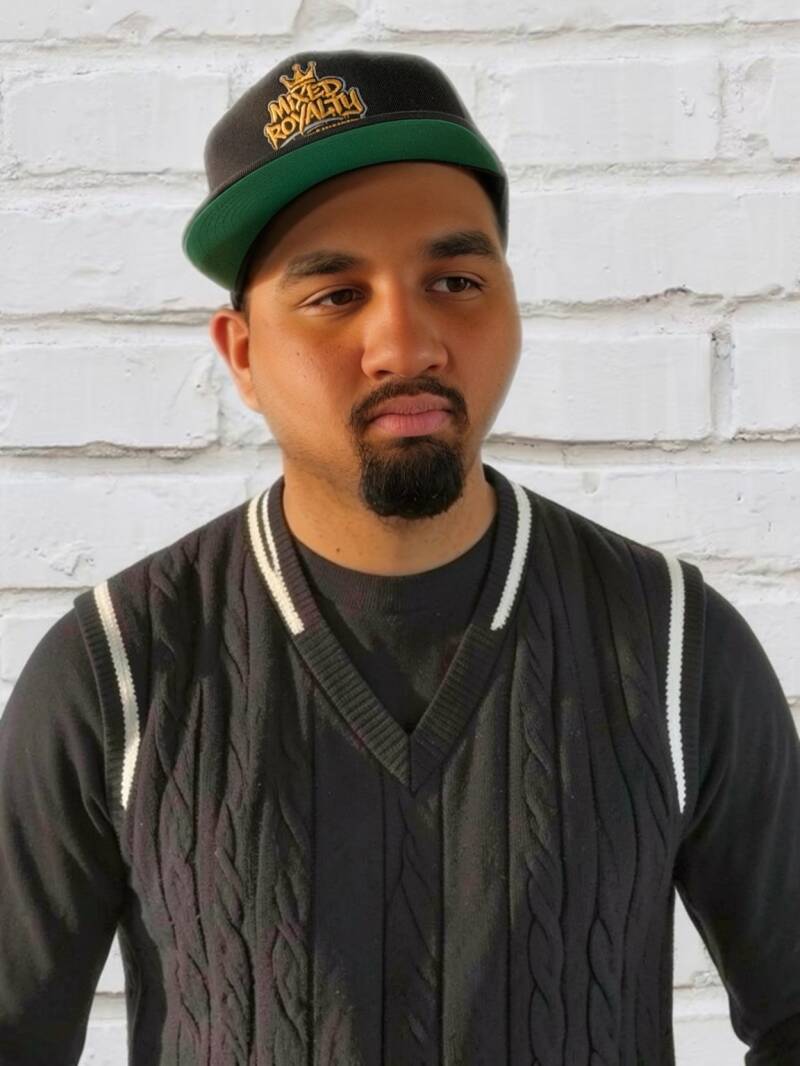
Summary:
A Contemporary R&B singer, songwriter, producer, and slow jam specialist, Reggie King Sears created and named the Southern R&B hybrid known as Ghetto Soul, blending modern R&B, neo-soul, Dirty South hip-hop, and pop-informed hooks. Active since his teens, he first found chart success in Southern Soul before developing into a modern Southern R&B artist known for slow jams, neo-soul influence, and Southern hip-hop elements.
Genre:
R&B
Styles:
Contemporary R&B, Adult Contemporary R&B, Neo-Soul, Southern Soul, Dirty South, Quiet Storm, Soul
Reference Biographical & Catalog Data
Prepared for editorial and database reference purposes
Similar artists
Gerald Levert, Trey Songz, Dave Hollister, Calvin Richardson, Sir Charles Jones, Raheem DeVaughn, Pressha, Urban Mystic, Dwele, Lyfe Jennings, August Alsina, J-Wonn, Donell Jones, Keyshia Cole, Tank, Eric Roberson, Anthony Hamilton, VEDO, Mo B. Dick, Omar Cunningham, K. Michelle, Ronnie Bell, Jon B., Sammie, EJ Jones, Angie Stone, Van Hunt, Eric Bellinger, Jacquees, Bobby Womack, BJ The Chicago Kid
Followed By:
Harrell Davenport, Christone “Kingfish” Ingram, D.K. Harrell, Quinn Sullivan, J-Wonn
IMPACT & INFLUENCE
Across multiple generations of Southern R&B, soul, and blues, Sears’ longevity, musicianship, and singer-producer authorship have helped shape a pathway for younger artists navigating similarly Southern-rooted hybrid lanes. Active and visible for more than a decade before the emergence of many artists in the current wave, his work and presence have been publicly acknowledged by musicians who came up later. Christone “Kingfish” Ingram has referred to Sears as “a Florida legend” and “the real deal,” noting that Sears had been established long before his own rise, while Harrell Davenport has cited Sears as an early point of reference in his artistic development. D.K. Harrell has also publicly praised Sears’ authenticity and emotional authority, recognizing him as a formative voice within the modern Southern blues and R&B continuum while Quinn Sullivan has praised Sears for "still being out here killing it" for over 20 years and has acknowledged his senority.

Influenced By:
Gerald Levert, Kavana, Bobby Womack, Marvin Sease, Phil Thornalley, Leslie Wilson, Dave Hollister, L.V. Johnson, K-Ci, Johnnie Taylor, Van Hunt, Alexander O’Neal, Calvin Richardson, Pressha, Donell Jones, Maze, Peter Frampton, Toy Matinee, Cheap Trick, Michael Sterling, O.V. Wright, Eagles, David Hudson, Luther Vandross, Lonnie Brooks, Jason Weaver, D’Angelo, Gregg Alexander, Clarence Reid, Todd Rundgren, Go West, Fred Bolton, Dwele, Eric Roberson, Brandy, Pimp C, J Dilla, Outkast, JT Money, George Lamond, The Suburbs, Lorenzo (Smith), Kevin Gilbert, Chico Banks, Eddie King, Pat Travers
The “Influenced By” list is intentionally comprehensive and reflects a wide but genuine range of artists who have shaped Reggie's vocal approach, songwriting, musicianship, and musical perspective over time. The influences span lineage, mentorship, stylistic development, and compositional thinking, rather than representing similarity or genre alignment alone.
Each artist listed played a meaningful role in his musical development, and the breadth of the list is meant to provide accurate context for how his "Ghetto Soul" sound evolved from Contemporary R&B, Southern Soul, neo-soul, hip-hop groove, blues feeling, and songwriting-driven pop.
BIOGRAPHY
Reggie King Sears is a Contemporary R&B singer, songwriter, producer, and multi-instrumentalist whose music brings together Contemporary R&B, Neo-Soul, Southern Soul, gospel, and Dirty South hip-hop in a hybrid style he calls Ghetto Soul. A baritenor and balladeer influenced prominently by Gerald Levert and Bobby Womack, Sears is a vocalist first, building his records around expressive singing, conversational phrasing, layered harmony, memorable hooks, and emotionally direct Southern storytelling.
Across a professional career that began in his early teens, Sears has moved through Soul-Blues, Southern Soul, Urban Adult Contemporary, Quiet Storm, Neo-Soul, and modern hip-hop-informed R&B without treating those traditions as mutually exclusive. His catalog ranges from piano-led slow jams and adult relationship records to modern Southern Soul, Neo-Soul grooves, and Trap’n’B productions shaped by Dirty South rhythm and attitude. That broad musical vocabulary eventually became the foundation of Ghetto Soul.
Born and raised in Fort Lauderdale, Florida, Sears grew up in Boulevard Gardens, the low-income, historically Black neighborhood known locally as Tatertown. Church, family, R&B, hip-hop, Southern culture, and the realities of life in the neighborhood all became part of his musical vocabulary. His writing would later return repeatedly to faith, relationships, sex, humor, temptation, betrayal, secrecy, consequences, reconciliation, struggle, and survival, often within the same record.
Sears began singing and playing instruments at an early age and was performing publicly by age 12. His entry into professional music came quickly. As a young teenager he became active on regional club and festival circuits, developing first as a singer and instrumentalist within blues and Soul-Blues settings.
From approximately 2003 through 2006, Sears worked professionally as a blues artist, though his music during the period was often closer to Soul-Blues, gospel, and R&B than strictly traditional blues. His early performances brought him into contact with major figures across blues, soul, and R&B, and he shared stages with artists including B.B. King, Buddy Guy, The Temptations, Pinetop Perkins, Guitar Shorty, Shemekia Copeland, Inner Circle, and others.
His artistic development was shaped not only by records but by direct contact with older musicians. Sears received guidance from figures including Solomon Burke, Marvin Sease, Denise LaSalle, Hubert Sumlin, and W.C. Clark while still a teenager.
Burke took a particular interest in Sears after hearing him sing, mentoring him in phrasing, stage presence, conviction, and emotional authority. Burke also gave Sears the “King” moniker that eventually became part of his professional identity. The relationship represented an important early bridge between Sears’ youthful musical ability and the adult soul tradition he would increasingly embrace.
Marvin Sease and Denise LaSalle reinforced another part of Sears’ developing identity: the importance of direct storytelling, adult emotional realism, humor, sensuality, and Southern intimacy without excessive polish or emotional distance. Sumlin and Clark contributed to his instrumental development and stage discipline, helping shape Sears into a bandleader as well as a singer.
Sears’ life on the road began almost as early as his recording career. He became the youngest touring member of James Brown’s Soul Generals and spent his formative years working as a sideman, opening act, bandleader, and eventually headlining performer. Those years helped build the endurance and rhythmic instincts that would remain part of his live identity long after his music moved beyond its early blues context.
After forming his own backing band in 2004, Sears made his recording debut with Transitions in 2005. The album was stylistically broad, combining Soul-Blues with R&B, funk, and jazz-rock influences while establishing Sears as both a frontman and multi-instrumentalist.
He followed it with the Soul-Blues album Blues Power in 2006. Although the title and marketing reflected the musical world in which his career had begun, the album continued to emphasize soulful vocals, gospel-informed phrasing, and R&B sensibilities.
Later that same year, Sears released Southern Soul, Florida Style and moved decisively toward contemporary Southern Soul.
The transition was less a sudden genre conversion than an expansion of tendencies already present in his early work. Sears had never intended traditional blues to be the final destination of his career, and the Soul-Blues he performed as a teenager already depended heavily on R&B singing, gospel phrasing, original songwriting, Southern storytelling, and rhythmic influences outside conventional blues.
Beginning in 2006, Sears began working extensively on the South’s so-called chitlin circuit of ghetto bars, rural juke joints, Southern Soul festivals, clubs, theaters, and regional venues, gradually establishing himself as a working Southern Soul and R&B headliner.
That road experience became one of the central foundations of his career.
His 2007 release Get Up On It moved Sears further toward Urban Adult Contemporary and modern R&B, with smoother arrangements and increasing emphasis on his voice and relationship-centered songwriting.
The Quiet Storm and UAC balladry that would become one of the defining sides of Sears’ music emerged especially clearly with “Prisoner of Love” in 2009 and “I Can’t Find a Love” in 2010. Those records placed greater weight on melody, intimacy, emotional restraint, and mature R&B vocal performance, signaling that the balladeer side of Sears’ identity was becoming central rather than occasional.
A planned 2009 album, Sweet Thang, was shelved because of label complications, but the setback did not stop Sears’ career. He remained active through singles and touring.
His late-2000s and early-2010s recordings included “Drawers Off,” the Southern Soul hit “Dirty Dancer,” “You Betrayed Me,” “Can’t Get You Out of My System,” and “With Every Beat of My Heart.”
2010's “Dirty Dancer” became one of the most visible records of Sears’ Southern Soul period and helped establish him with radio and audiences in that market. That same year he was nominated for a Soul-Blues Music award for the category of "best new artist."
“You Betrayed Me” followed as an important slow jam and earned Best Male Vocal Performance and Best Slow Jam from Soul-Patrol in 2011. “Can’t Get You Out of My System” and “With Every Beat of My Heart” continued his movement toward Contemporary R&B, Quiet Storm, and Adult Contemporary R&B.
During these years Sears was also becoming increasingly active as a songwriter and producer for other artists.
In 2007 he wrote and produced Southern Soul artist Jerome Towers' debut album "Freakazoid" which produced the regional hit "You Gotta Be A Freak."
2008-2009 found him co-writing and producing Black Zack’s Southern Soul hit “Southern Soul Lover” as well as “Broken Heart, Bills and Roaches”, both appearing on Zack's "Southern Soul Radio album." The work reflected an early overlap between Southern Soul storytelling and Southern rap, an intersection that would eventually become increasingly important in Sears’ own music.
By the early 2010s, several major strands of his career were developing simultaneously.
Sears became a preacher, formally extending the church and gospel influence that had been present in his life and music from childhood. Ministry became an important part of his personal and professional life, but it did not represent a retreat from music.
Instead, Sears continued working simultaneously as a recording artist, touring headliner, session musician, producer, songwriter, arranger, vocalist, and multi-instrumentalist.
Around 2012, Sears and longtime collaborator Saint Xose founded Mixed Royalty, a creative collective, production company, and songwriting team.
Mixed Royalty became a base for songwriting, production, vocal arrangement, musicianship, artist development, and experimentation across Contemporary R&B, Neo-Soul, Southern Soul, gospel, pop, and Dirty South hip-hop. Sears and Xose approached those traditions as connected parts of contemporary Black music rather than isolated genres.
That collaborative environment helped provide the foundation for the musical language Sears would eventually formalize and name Ghetto Soul.
Sears continued his own recording career with So Many Roads in 2014.
The album reflected the increasingly broad R&B vocabulary he had developed over the previous decade. Among its songs was “Damn Shame,” an R&B ballad built around trap-influenced production, an early example of Sears placing his established balladeer identity directly against the rhythmic vocabulary of contemporary Southern hip-hop.
At the same time, the 2010s became a particularly active period for Sears as a session musician and behind-the-scenes collaborator.
He contributed guitar, keyboards, vocals, songwriting, arrangements, production, and other studio work across R&B, Southern Soul, funk, hip-hop, and alternative music. Rather than limiting his musicianship to his own records, Sears spent substantial time working on other artists’ projects, sometimes as an instrumentalist and sometimes in broader creative roles.
His studio and performance history during and around this period included work involving Timmy Thomas, Blowfly, R.A. the Rugged Man, Kurupt, Isaiah Rashad, Glasses Malone, Dae One, Son Little, OG Maco, and numerous other artists, and was slated to work with Mac Miller before his untimely death.
Sears contributed guitar to R.A. the Rugged Man’s All My Heroes Are Dead and appeared as a keyboardist and soloist on Blowfly’s 77 Rusty Trombones. He also worked extensively with Timmy Thomas and Blowfly in live and studio environments, reinforcing his fluency in funk, soul, groove-based performance, and improvisation.
His range as a session musician allowed him to move naturally between R&B and Southern Soul sessions, hip-hop records, funk projects, and more alternative settings. The outside work became an important parallel component of his career rather than a handful of isolated guest appearances.
Touring remained equally significant.
Beginning with his Southern Soul transition in 2006, Sears built much of his professional life on the road. What began on the Southern chitlin circuit eventually expanded into repeated national tours throughout the United States and extensive international touring.
At his busiest, Sears performed hundreds of dates per year, primarily as a headlining artist.
His U.S. touring history has included performances across Florida, Georgia, Louisiana, Mississippi, Texas, Oklahoma, Missouri, Kansas, Nebraska, Iowa, Illinois, South Carolina, North Carolina, Tennessee, Kentucky, Indiana, Ohio, Michigan, Minnesota, Virginia, Maryland, Pennsylvania, New Jersey, New York, Massachusetts, New Hampshire, Maine, Nevada, California, Washington, D.C., and numerous other markets.
The nature of the venues varied widely, from ghetto bars and rural juke joints to clubs, listening rooms, theaters, regional events, and major festivals. Although some venues and festivals along Sears’ touring routes also presented blues and roots music, Sears was primarily touring and being presented as a Southern Soul and R&B artist during this period, consistent with the direction his recordings had taken since 2006.
The touring eventually became international in a major way.
Sears has performed throughout Europe, with countries on his touring history including Romania, Hungary, Croatia, France, the United Kingdom, Belgium, Austria, the Netherlands, Poland, Switzerland, Germany, and other European territories.
One particularly extensive European headline tour in 2023 included roughly 30 performances across approximately 11 countries in little more than two months, following an already active series of U.S. dates earlier that year.
The run included club, theater, and festival performances and represented only one section of Sears’ broader international touring history.
The importance of the road is central to understanding Sears’ career chronology. Periods in which his own studio releases became less frequent were not periods of professional inactivity. During much of the 2010s and into the 2020s, Sears was working simultaneously as a touring headliner, session musician, producer, songwriter, preacher, and recording artist.
That cumulative experience became essential to the development of Ghetto Soul.
Rather than describing one specific beat, tempo, or production formula, Ghetto Soul functions as Sears’ umbrella for the full range of his musical identity: Quiet Storm and Adult Contemporary R&B balladry, Neo-Soul, modern Southern Soul, gospel-rooted vocal arrangement, Trap’n’B, and Dirty South-influenced Contemporary R&B.
The connective tissue is Sears’ voice, songwriting, Southern perspective, and rhythmic sensibility.
Vocally, Sears identifies strongly as a balladeer. His performances combine weight through the lower and middle register with a strong upper range, conversational phrasing, melisma, dramatic dynamics, and the emotional directness associated with Southern R&B.
Gospel remains an important structural influence. Its presence can be heard in his stacked background vocals, call-and-response arrangements, ad-libs, chord movement, harmonic tension, and the way his performances often build dynamically toward emotional peaks.
Sears is also an accomplished multi-instrumentalist and producer who frequently performs substantial portions of the instrumentation on his own recordings. His songs often begin at the piano or keyboard, where he develops harmony and melody before expanding the arrangement through programmed drums, synthesizers, live guitar and bass, organ, layered vocals, and hip-hop-informed rhythm.
His latest release, Crowned & Dangerous, represents one of the broadest expressions of the Ghetto Soul identity developed throughout his career.
At the center of the project is “Luv Gangsta,” a longtime staple of Sears’ live performances before its formal recording. The song combines Contemporary R&B melody and ballad-oriented vocals with Dirty South rhythm, swagger, and hip-hop-informed production.
“Luv Gangsta” also helped crystallize Sears’ Luv Gangsta persona, connecting his longstanding identity as an R&B singer and balladeer with the street-rooted Southern attitude that has informed his writing and production for years.
Rather than keeping the album within a single style, Crowned & Dangerous deliberately moves through several areas of Sears’ musical vocabulary.
“Say U Miss Me” represents his Neo-Soul side through groove, harmony, musicianship, and vocal phrasing, while “Make Me Cheat” blends Neo-Soul and R&B singing with soulful hip-hop production influenced by the early-2000s relationship between sample-based rap and soul music.
“Lady Next Door” bridges Urban Adult Contemporary and Southern Soul, while “Baby Baby Baby (Meet Me at the Motel)” represents Sears’ modern Southern Soul lane.
“What He Don’t Know,” featuring Gerald Albright, moves into sophisticated Neo-Soul and Adult Contemporary R&B territory.
“Walk In,” featuring Sears’ close friend Christone “Kingfish” Ingram, is structured as a conversational Contemporary R&B slow jam built around friendship, romantic conflict, loyalty, and temptation. The collaboration places Ingram inside a contemporary R&B duet rather than relying on the blues setting with which he first became widely identified.
“Somebody’s Woman,” featuring Mr. David, aka Pressha of “Splackavellie” fame, emphasizes Sears’ mature UAC and balladeer side through adult relationship storytelling.
“Lady Pimp,” featuring Miami rap veteran JT Money, brings Sears’ Dirty South hip-hop influence directly to the foreground through a Trap’n’B structure that combines sung R&B sections with Southern rap.
Other material on the album moves through piano-led balladry, Neo-Soul, Southern Soul, and contemporary hip-hop-informed production. The project includes additional contributions from producer and multi-instrumentalist Patrick “GuitarBoy” Hayes, Slim Guerilla, Saint Xose, and other collaborators.
Throughout the project, Sears remains its central vocalist, songwriter, producer, and instrumental architect.
Across more than two decades as a professional musician, Reggie King Sears’ career has encompassed several interconnected chapters: teenage Soul-Blues artist, Southern Soul recording artist and hitmaker, chitlin-circuit road warrior, Quiet Storm and Contemporary R&B balladeer, songwriter and producer for other artists, heavily employed session musician, preacher, national and international touring headliner, multi-instrumentalist, and creator of Ghetto Soul.
The common thread has remained his voice, authorship, and experience within Southern Black music.
Beginning in the ghetto bars, rural juke joints, clubs, and Southern Soul festivals of the South, Sears developed into an artist whose career eventually stretched across the United States and Europe while continuing to write, produce, record, and work behind the scenes for other musicians.
Ghetto Soul became the name for that accumulated experience: Contemporary R&B shaped by gospel, Neo-Soul, Southern Soul, Dirty South hip-hop, studio musicianship, the church, the street, and decades spent on the road.